
 EN
EN
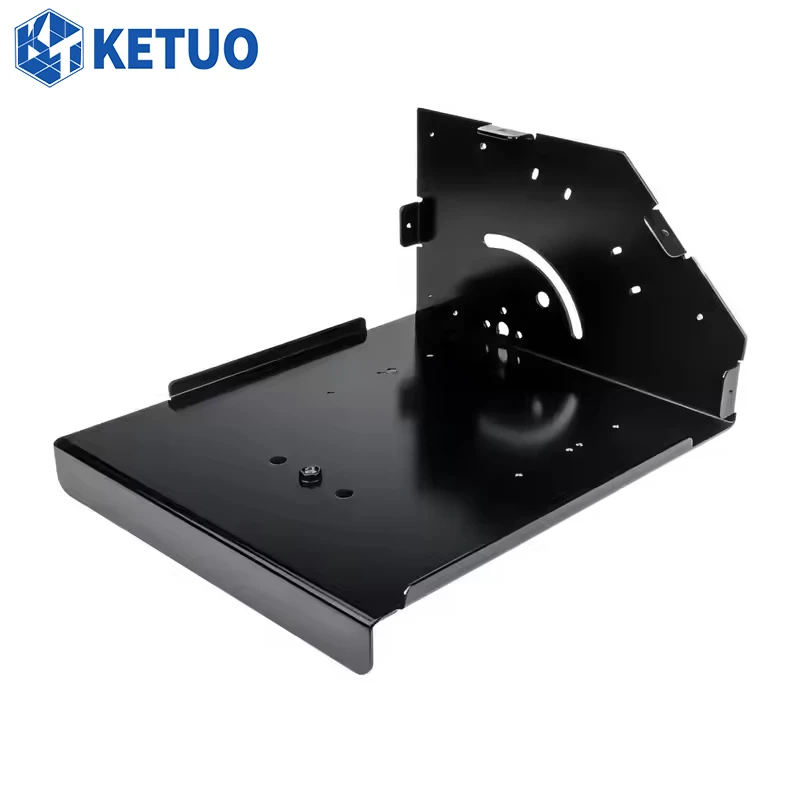
Custom sheet metal fabrication is a critical method of making many products we use on a regular basis. At TOHUAS, our focus is on making metal parts that fit and function properly. Literally speaking, when we say custom sheet metal processing, it is to take the flat sheets and forming them into different shapes according to requirements separately for application. This process is quite important: it ensures that the parts we make are of great quality and can be safely used for many different applications. In cars, for instance, metal parts have to be strong and just the right fit together; otherwise they’ll pose a problem. This is why controlling the way we process shaping of that metal is so important. It also helps avert welding distortion, when the metal warps or twists after being welded.
Quality Control for Custom Sheet Metal Work
When it comes to custom sheet metal work, quality control is everything. It's a way to go look and make sure everything is done properly. For example, before we begin welding something, it is important that the metal sheets don’t have any rust or dirt on them. If they are not, it may not hold well. Also, welding at the proper temperature is very important. The metal could become warped, assuming some other part of it hasn’t cracked or shattered if it’s too hot or too cold. Some of the known ways to minimize welding deformation include heating the metal before working it, securing parts in place with jigs, and cooling welded areas at a slower rate. This serves to prevent the metal from altering its shape unpredictably. At TOHUAS we also take care to train our staff in these methods. When everybody knows how to deal with the metal properly, we can make better things.
Locating trustworthy wholesale producers for custom sheet metal parts can be tough, but is extremely important. First, it helps to find suppliers with a good reputation. It can be a good idea to read online reviews and ask other businesses for references. You need a supplier who listens to your concerns and offers excellent products. And it’s also a good idea for you to make sure the supplier is experienced in custom sheet metal fabrication. They ought to be well-versed in handling different types of metals and understanding challenging designs. When you find a few suppliers, feel free to request samples of their work. That way you can see the quality before you buy any big orders. Here at TOHUAS, we value great relationships with our suppliers. This not only helps us identify the best materials, it also means we can serve our customers efficiently. So it will be worth your while to spend time searching for quality wholesale suppliers.
What is the Procedure for Preventing Sheet Metal from Deforming during Welding?
Welding is not always an easy task particularly in welding precision sheet metal. One of the biggest issues that transpire during welding is deformation. This is that the (metal) should deform but this is not a desire outcome. We believe that there are some Best Practices that would help to prevent this at TOHUAS. A single-piece of advice is that one has to plan his or her welding project sufficiently. It is always good to think ahead before you start in order to know where you are going to need those welds. The location of the welds can be done properly to ensure that the metal does not bend or twist.
One of the rules that can be followed is to heat carefully. That is a serious issue, since once metals become overheated, they are likely to be warped. To prevent it, weld at a reduced temperature and move the welding torch or electrode comparatively Fast. That is how the heat does not remain in a particular location too long. Or as an alternative, place in one of the welds at a time. Eg: begin at the center of your piece and stitch to the sides. All this assists in balancing and eliminating stress to the metal.
Clamps or holding devices are also very good. These tools clamp the metal pieces together as you weld keeping the metal pieces in place. By so doing, the metal will, in a large measure, be unlikely to dance, or twist. Lastly, welding can also be slowed down by cooling the metal to prevent help. Do not pour it in or plunge it in a mass of water to cool off, cool off naturally. This is to avoid sudden alteration of shape. These best practices of TOHUAS are applicable in minimizing welding deformation so that the welding products can be as close to zero, or nearer, as possible.
How to Maintain in Custom Sheet Metal Fabrication?
Within TOHUAS we appreciate the fact that quality is highly necessary in custom sheet metal fabrication. In a bid to uphold quality reliability, we will put into consideration three aspects, planning of fund, tools and skilled workers. First, good planning is key. This is everything about clear designing and knowing what materials, how some things can be constructed. It allows no mistakes and ensures quality when everyone is aware of the plan.
Second, it is also significant related to the proper equipment. Equipments and equipment should be well maintained and fitting the job. The equipment when not working properly can lead to sub-optimal work. At TOHUAS, we would inspect over and over our machines before we embark on a project to make sure that they are in the correct state. This is how each and every bit of metal cuts and molds perfectly.
And finally, you must be able to rely on skilled employees. It is through training and experience that such workers are able to know what to do with various materials and processes. At TOHUAS, we invest in our employees and provide training and development. Once the workers are certain as to what they are doing, they are able to detect the problems before things get out of hand. This meticulousness culture helps us to produce flawless products. By paying a lot of attention to planning, equipment maintenance, and the assistance of the staff members, TOHUAS can ensure that every custom sheet metal project will meet the highest quality standards.
How Can We Reduce Deformation During Welding?
During welding, distortion should be minimized to ensure that the shape of sheet metal is not distorted. We have a few tricks here at TOHUAS, that may come in handy on this score. Among these feasible methods is through so called tack-welds. Those are just little welds, so that the metal parts can be kept together till you do the real welds. Tack welding does help in ensuring that everything is kept straight and does not allow space to bend it.
The other technique is the control of the temperature of welding. As it has been mentioned above, metals may be deformed under heat. We are able to use techniques like stitch welding to regulate this. It implies that you are doing spot welds everywhere, rather than one large long weld at once. This assists in dissipating the heat and reduces chances of warping of the metal.
The welding speed can be readjusted, also, with its assistance. It can be either too slow or too fast. The optimum speed aids in distributing the heat evenly all over and this will prevent the metal being distorted. Besides, alternative weld positions can be used. An example is in the welding in the flat position where there will be control of the heat better when compared to welding in a vertical position.
Lastly, the metal should be allowed to cool slowly after welding. One practical method of ensuring that a component does not get too hot is to do nothing about it, except allow the part to cool down by itself. All this that we do at TOHUAS assists in keeping the sheet metal straight and entirely true. All of these could be employed through sweat and by paying attention to the production process of welds so that they do not distort and lead to the clients receiving our results.